Yunnan, China – 14 Days Travel Itinerary
Yunnan is a land of transitions: it lies between high plateau and tropics, between quiet lakes and roaring forests, between centuries-old traditions and a subtle modern elegance. Traveling here, you encounter landscapes that could hardly be more different, and people who form a living mosaic of China through their culture and way of life. These 13 days take you from Dali to Lijiang and on to Xishuangbanna—not simply linking points on a map, but creating moments of pause, encounters, and small rituals: the first tea of the day, a slow wander through an old alley, the writing of a few quiet thoughts into your travel journal.
The route begins with four days in Dali, where you explore ancient streets, the wide embrace of Lake Erhai, and the timeless Three Pagodas, discovering the elegance of a city that has been a cultural center for centuries. From there, five days in Lijiang await, a UNESCO World Heritage town where canals, bridges, and wooden houses form a living stage for both nature and culture—from hiking in Blue Moon Valley to quiet villages like Baisha and Yuhu. Finally, the journey leads to Xishuangbanna, where four days bring a shift into the tropics—rainforest trails, botanical gardens, the colorful water-splashing festival of the Dai, and the glowing nights along the Mekong.


Day 1 – Dali Ancient City & Bonfire Night
Your journey begins with an unhurried walk through the lanes of Dali Ancient City. The streets are laid out like a chessboard, the timber-and-stone facades carry the traces of centuries, and between the houses drifts the scent of tea and fresh pastries. The main arteries—Fuxing, Yu’er, and Renmin Roads—still reveal the old city pattern, a quiet rhythm into which you almost naturally fall as you walk. Take your time for the Dali Museum, housed in a historic residence, where the story unfolds through courtyards, ancient stones, and understated galleries. In the evening, the Bonfire Dance at the Grand Marshal’s Mansion awaits—undeniably a performance for visitors, but when the fire crackles, drums beat, and dancers lift their arms in unison, you cannot help but feel carried by its pulse. A tip: once the sun dips behind the mountains, temperatures drop quickly. A light jacket is more than a detail—it is the key to truly enjoying the night.


Day 2 – Cycling the Erhai Shore
On the second day, the horizon opens: rent a bicycle by the shore of Erhai Lake and follow the Eco-Corridor, a green ribbon stretching along the coast. The route takes you through wetlands, past the famed Panxi S-curve where lake and mountain scenery merge in an elegant line. Along the way, you pass small villages like Longkan, where time seems to move slower and a roadside popsicle makes for the perfect pause. Further north, the “Maldives Village” of Majiuyi invites you to sip coffee while gazing at the glittering water—a place where sky and lake are nearly indistinguishable. Toward evening, stop, set the bike aside, and watch the sunset over the Cangshan Mountains. The lake turns copper, the mountains stand in silhouette, and you realize that travel often happens in silence. Practical tip: Rental bikes are convenient, but don’t forget to ask for a lock. This will give you peace of mind, allowing you to park your bike and explore the area on foot.


Day 3 – The Three Pagodas
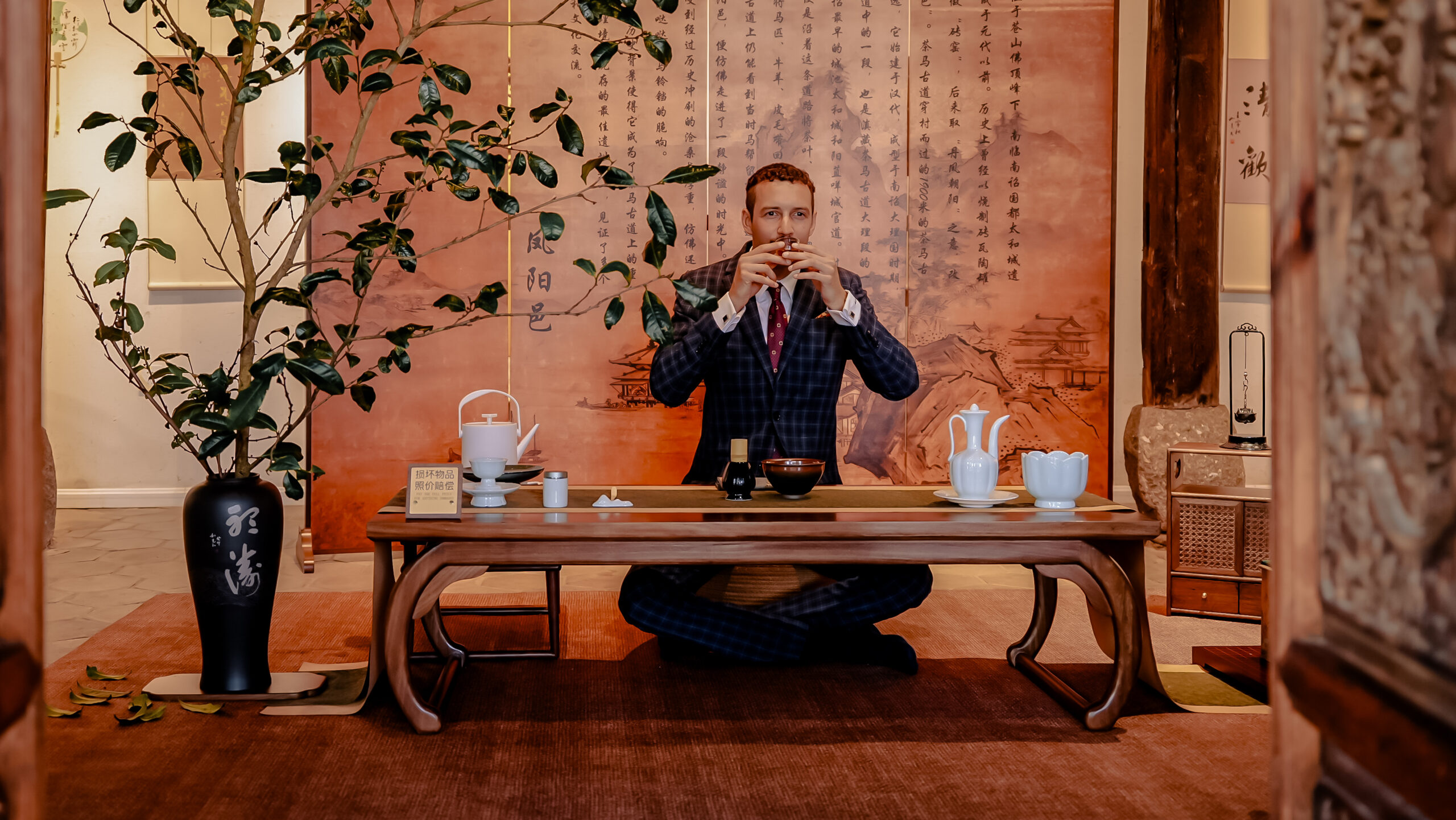
The third day begins early, while the air is still clear and the town quieter. The Three Pagodas are a landmark known to many, but those who visit in the morning light are surprised by the calm they radiate. Their simple, upright forms stand against the backdrop of the mountains as a reminder of permanence—something we often overlook in daily life. Beyond the pagodas lies a vast temple complex where time seems to flow differently: walk slowly, listen to the crunch of gravel under your shoes, and notice the details—the shadows of eaves, the scent of incense, the rhythmic strike of a prayer bell. Back in Dali, you should not miss the Bai Three-Course Tea. Its sequence is a ritual in itself: first the bitter tea, then the sweet, and finally the lingering, spiced aftertaste. These three steps are more than flavor—they are a metaphor for life and travel itself: bitter at the beginning, sweet along the way, and in the end, a taste that endures.


Day 4 – Xizhou Ancient Town
On the fourth day, it is worth leaving Dali slowly behind and heading to Xizhou. Here, craft traditions live on in quiet workshops—Jiama prints, carved wood, hand-thrown pottery, things that require patience and are carried across generations. In the narrow streets drifts the scent of freshly baked flatbread, and it is worth pausing to taste a piece and exchange a few words with the vendor. Often, it is these small moments that shape a journey. In the afternoon, you set out for Lijiang, a drive that carries you from the open lakeshore into a new world. Before every departure, I have made it a habit to place my notebook and pen at the top of my bag—for arrivals almost always bring fresh thoughts waiting to be written down.


Day 5 – Lijiang Ancient Town
When you set out for Lijiang in the morning, you encounter a town that is more than just a collection of old houses. Lijiang Ancient Town is a weave of canals, stone bridges, and winding alleys, veins running through the city’s heart. Wander without a plan—this very aimlessness is the true experience. On Sifang Street, life pulses: merchants spread out handwoven fabrics, the air carries the scent of fresh coffee and skewers on the grill, and every now and then you hear a flute’s melody or the steady beat of a drum. Climb up to Jiefeng Tower and the view unfolds: a slate-gray sea of rooftops with Jade Dragon Snow Mountain rising snowcapped behind—a panorama that makes you feel part of a larger picture. If you come across a Dongba papermaker, stop. Watching the delicate sheets pulled from plant fibers is a quiet art, one that grounds you immediately. Tip: early in the morning, the town is nearly empty, and the bridges and alleys are yours alone.


Day 6 – Blue Moon Valley & “Impression Lijiang”
A trip to Blue Moon Valley takes you right to the foot of Yulong Snow Mountain. Here, meltwater from the glaciers collects in terraced lakes, whose colour shimmers between milky white and deep turquoise. As you stroll leisurely along the shore, you notice how the air seems clearer and breathing easier – almost as if nature wants to cleanse you. The contrast between the majestic mountain backdrop and the still water is overwhelming, yet quietly peaceful and beautiful. Pause for a moment, watch the light dance across the water and enjoy the feeling that time flows more slowly here.


In the afternoon, the mood changes completely when you experience the performance ‘Impression Lijiang’. Directed by Zhang Yimou, this spectacle takes place directly in front of the magnificent backdrop of Yulong Snow Mountain. Hundreds of dancers in traditional costumes move across the natural stage, drums echo through the valley, and for a moment, the entire landscape itself seems to become part of the performance. It is an experience of archaic power, in which culture and nature flow inseparably into one another. A warm scarf is a good companion here – the wind blowing down from the peaks can be surprisingly cool.

Day 7 – Baisha Ancient Town
On the seventh day, you head to Baisha, a small settlement north of Lijiang. Once the first home of the Naxi, it still radiates a modest, almost intimate atmosphere. Compared to Lijiang, Baisha feels like a pause: lanes are narrow, walls whitewashed, doors and windows painted red. In workshops, artists create silk paintings or embroidery—detailed, delicate, yet marked by a touch of imperfection that makes them alive. Sit in a quiet tea room, order a pot of jasmine tea, and watch the light shift across the open windows. If you wish to take something home, let it be the small things: a handmade notebook, a piece of linen fabric, or perhaps only the memory of a quiet conversation.


Day 8 – Yuhu Village
On the eighth day, take the road to Yuhu, a small village at the foot of Jade Dragon Snow Mountain. Houses are built of stone, many with simple wooden doors weathered by the sun. Horses graze in front of courtyards, children play at the fountain, and the mountains reflect in the still waters of the lake. A walk along the shore reveals the simplicity of life here—a contrast to the bustling streets of Lijiang. If you wish, visit a small private museum showcasing Naxi stories and artifacts, or simply sit on a bench and let the landscape work on you. My personal tip: bring along a modest picnic—a piece of bread, some fruit, maybe a handful of nuts—and allow yourself a quiet hour with nothing but you and the mountains.


Day 9 – To Xishuangbanna, Night Market Ease
The ninth day is a travel day, yet more than just a transition. The easiest way to reach Xishuangbanna is by plane—the journey is short, but the change is palpable. As you step off the aircraft, the air feels more humid, warmer, heavier, like a soft curtain falling between you and the north. At the Mekong River Jinglan Hotel, you find a place of calm and elegance, perfect for the first evening. If you prefer not to retreat immediately, a stroll through the Starlight Night Market is worth your time. Here, the aroma of grilled meat mingles with exotic fruits, vendors offer handicrafts and textiles, and among lanterns and strings of light glows a touch of Mekong romance. A practical note: take only as much cash as you need for a few treats—this way your hands stay free to taste, sample, and explore.

Day 10 – Mengyuan Wonderland: Rainforest & Caves
The first day in Xishuangbanna leads you straight into the tropics—into Mengyuan Wonderland, a landscape where rainforest and karst caves intertwine. From the moment you enter, humid, warm air envelops you, laced with the scent of damp earth and the calls of exotic birds. Trails wind through dense greenery, lianas hang like natural curtains from the trees, and occasionally the forest opens to reveal a wide gorge or moss-covered rock. The karst caves are especially striking: cool, dark, silent—a sharp contrast to the abundance outside. The beam of your headlamp glints against mineral walls, stalactites hang like sculptures from the ceiling. A small note: wear non-slip shoes that can handle both rainforest mud and damp stone. After such an outing, it is worth ending the day quietly—perhaps with a strong coffee or a glass of tea, as you capture your impressions in your travel journal.


Day 11 – Xishuangbanna Tropical Botanical Garden
On the eleventh day, the itinerary takes you to the Botanical Garden of Xishuangbanna—one of the largest and most diverse of its kind in all of Asia. Home to more than 13,000 plant species, it ranges from tiny orchids to giant bamboo groves, from tropical palms to rare medicinal plants. Walking along the landscaped paths, you move between manicured gardens and patches of dense, almost impenetrable rainforest. The greenhouses are particularly striking: exotic blossoms in vivid colors, carnivorous plants that look like miniature artworks, and trees usually found only in botanical textbooks. Take your time—sit on a bench, read a few pages of a book you’ve brought, and let the diversity sink in. The humid air can be tiring, so it’s wise to bring enough water and take short breaks. The garden is not only a place of knowledge and research but also a gentle reminder of how rich and fragile our natural world truly is.


Day 12 – Mengle Temple in Jinghong
A visit to Jinghong would not be complete without seeing Mengle Temple, the largest Buddhist temple complex in all of Xishuangbanna. From afar, the golden roof glitters in the sun, and as you approach, the vast complex reveals itself with grand staircases, towering statues, and intricate ornamentation. The temple is not only a religious center but also a living place, where monks in saffron robes go about their daily routines—sweeping courtyards, chanting sutras in the open hall. Particularly striking is the immense Buddha statue that rises above Jinghong, its calm gaze watching over the city like a silent guardian. Take time to sit on a bench in the shade, listen to the sound of bells and the murmuring of prayers. If you wish, you can make a small offering for incense and light a stick yourself—a moment of reflection and connection before returning to the rhythm of travel.


Day 13 – Water Splashing, Dai-Style
Today you experience one of Yunnan’s most colorful and joyful festivals: the Dai Water-Splashing Festival. Originally a New Year’s ritual where water symbolized blessing, it has become a lively celebration enjoyed by locals and travelers alike. By morning, people gather in the streets, many dressed in traditional embroidered clothes. Water is carried in bowls, buckets, or bamboo tubes—and before you know it, you are part of a spirited game where laughter, shouts, and splashing water fill the air. Even outside the main season, daily performances keep the tradition alive. My advice: keep valuables in waterproof bags and bring a second shirt—nobody stays dry here. Afterwards, enjoy a light meal—a noodle soup with fresh herbs, perhaps a plate of papaya salad—something to restore without weighing you down. This festival lingers not just as an event but as a feeling of lightness and shared joy.


Day 14 – Last Wanderings in Xishuangbanna
The final day belongs to leisure. Keep the morning free for small discoveries: a cup of tea in the Nannuo Mountains, where ancient tea trees have been tended for centuries; a walk through a village where time moves slower; or a detour to the sky-reaching Wangtianshu tree, whose towering trunk and broad canopy remind you of the rainforest’s grandeur. Each of these places offers, in its own way, a quiet farewell—a pause before the return journey calls. In the evening, immerse yourself once more in Xishuangbanna’s culture—perhaps with a dance or drum performance alive with colors, sounds, and myths. Afterwards comes the conscious act of packing. The finest souvenirs are not objects but memories—the notes in your journal, the scent of rain in the forest, the echo of voices and music that have traveled with you.